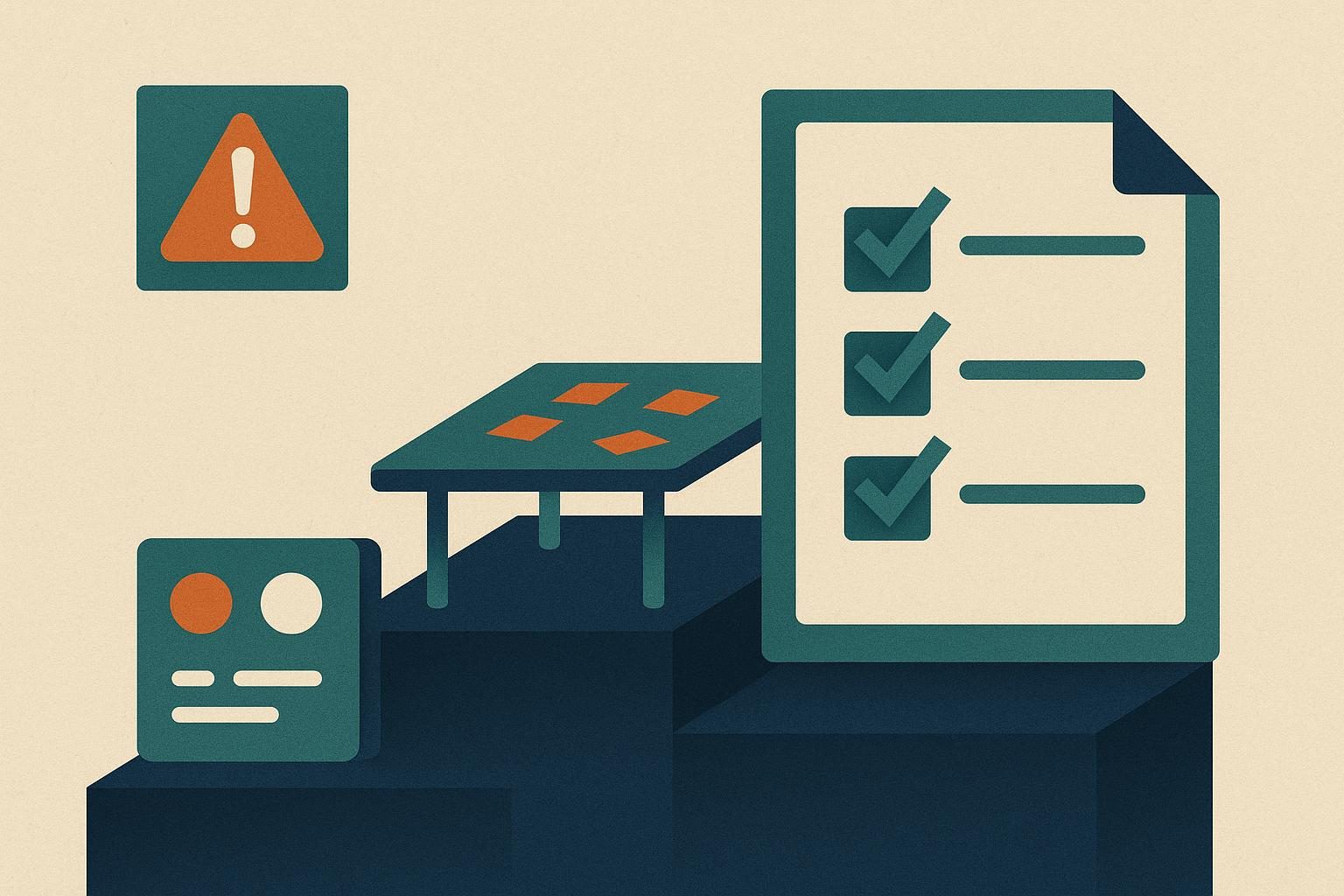
Testing an incident response plan means exercising it before an incident forces the question, and the appropriate method scales with how much of the plan an organization wants to stress. The methods run along a ladder: a read-through of the written plan, a discussion-based tabletop exercise, and a full functional exercise that puts people and systems under simulated conditions. Each higher rung costs more and surfaces different failures. Red Canary states the core proposition plainly: an incident response plan needs to be tested before it can be effectively implemented, and following a formal, written, tested plan is far superior to relying on ad hoc actions.
The National Institute of Standards and Technology frames incident response in four stages in its guide: preparation, detection and analysis, containment and eradication and recovery, and post-incident activity. The SANS Institute uses a six-step version that adds identification, eradication, and lessons learned. As Red Canary notes, many organizations add a further step that neither list names explicitly: testing the process on a regular basis. Testing is where a plan that reads well on paper meets the people who have to execute it.
Why test an incident response plan at all?
An untested plan is an assumption, not a capability. Red Canary observes that an organization will likely experience a cybersecurity incident, and that an up-to-date plan changes how quickly and effectively it can contain threats and recover. The stated benefits range from cost and time savings to better damage mitigation and regulatory compliance, along with the experience that guides future responses.
Testing exposes the gaps that only appear under load. A plan may name a response team but omit backup contacts. The Canadian Centre for Cyber Security, in its January 2026 guidance ITSAP.40.003, advises that response teams keep alternate means of contact such as mobile phones or out of band email, and that each member have a backup contact in case they cannot be reached. That kind of gap is invisible in a document review and obvious the first time a primary contact is unreachable during a live event.
What are the incident response plan testing methods?
The methods sit on a ladder of increasing realism and cost. Moving up the ladder trades convenience for fidelity.
- Plan review or read-through. Team members walk through the written plan section by section to confirm that roles, escalation paths, and playbooks are current and internally consistent. This catches stale contact lists, missing approvals, and undefined ownership before any scenario is introduced. The Canadian Centre for Cyber Security notes that an incident response policy establishing authorities, roles, and responsibilities should be approved by senior management, so a review is the moment to confirm that approval and alignment still hold.
- Tabletop exercise. A discussion-based session in which participants talk through their response to a scripted scenario, such as ransomware or a data theft event, without touching production systems. Tabletops test decision-making, communication, and escalation. They are the practical way to confirm that a communications plan works, which the Canadian guidance describes as detailing how, when, and with whom the team communicates, including a central point of contact for reporting.
- Functional or full-scale exercise. A hands-on drill that has personnel perform real response actions against simulated conditions, exercising detection tools, containment steps, and recovery procedures. RSI Security describes containment methods including isolation through firewalls and network segmentation, and hard drive wiping through reimaging or reformatting, along with eradication steps such as removing affected assets, deploying patches, and moving uncompromised assets to different environments. A functional exercise is where those mechanics are actually attempted rather than described.
The distinction that matters for planning is discussion versus execution. A tabletop asks whether people know what to do. A functional exercise asks whether the tools and procedures actually do it.
When is each method appropriate?
Match the method to the maturity of the plan and the question being asked. The three rungs answer different questions and carry different disruption.
| Method | Question it answers | Disruption to operations |
|---|---|---|
| Plan review | Is the written plan current, complete, and consistent? | Minimal |
| Tabletop exercise | Do people understand roles, escalation, and communication? | Low |
| Functional exercise | Do detection, containment, and recovery actually work? | Higher |
A newly drafted or recently revised plan is a candidate for a review first, because a functional exercise built on a document with stale ownership tests the wrong thing. Once roles and playbooks are confirmed, a tabletop pressure-tests judgment against a realistic scenario. RSI Security frames threat detection around classifying threats by risk level, asset at risk, type of threat, and point of origin, and a tabletop is where a team confirms it can make those classification calls under a scripted narrative. A functional exercise is warranted when an organization needs assurance that the technical steps hold, particularly for high-impact scenarios that its threat and risk assessment flags as priorities.
The Canadian Centre for Cyber Security recommends that organizations conduct a threat and risk assessment to identify critical assets and how they can be compromised, then prioritize response efforts accordingly. That assessment is the input that decides which scenarios deserve the more expensive functional exercise rather than a discussion.
Who should be in the room?
Testing is a cross-functional matter, not a purely technical one. The Canadian Centre for Cyber Security lists roles to consider for a response team: critical path personnel, security practitioners, IT or cyber security specialists, project engineers for operational technology environments, legal, and management. An exercise that includes only the security team validates the security team, not the organization's response.
Legal and management belong in exercises for reasons the guidance makes explicit. The Canadian Centre notes that depending on the incident, an organization may need to contact law enforcement or consider engaging a lawyer for advice, and may need to involve its media team. Notification procedures are described as critical to the success of incident response, requiring identification of key internal and external stakeholders, including third parties such as clients and managed service providers. Those notification decisions carry legal and regulatory weight, and a tabletop is a low-cost setting to rehearse who decides and when, before a live clock is running.
How often should a plan be tested?
Regular testing is the recurring theme across the sources, which treat a single point-in-time test as insufficient. Red Canary places testing as an ongoing step added to the NIST and SANS lifecycles, and RSI Security describes frequent testing and exercises as the way to validate the effectiveness of incident response plans. The plan itself is a moving target: personnel change, systems change, and the threat picture changes.
The Canadian Centre for Cyber Security reinforces the maintenance point by advising organizations to update employees on current incident response planning and execution and to tailor training to roles and responsibilities. A test also feeds the lessons-learned step that SANS names, closing the loop so that each exercise revises the plan rather than merely grading it. The tradeoff a general counsel or CISO faces is candid: a read-through is cheap and reassuring but proves little, while a functional exercise proves the most and disrupts the most. Deciding which to run, and how often, is the judgment that determines whether the plan holds when an actual incident replaces the scripted one.